linguagem
Lar / Blog / Notícias da indústria / How to Prime a Self-Priming Pump: Step-by-Step Guide for Reliable Start-Up
Notícias


 2026.10.26
 Notícias da indústria
What Priming Means for a Self-Priming Pump
In the field of rotary pumps, priming refers to the process of filling the pump casing and suction line with liquid and expelling air before the pump is started. For an ordinary centrifugal pump, if no liquid is primed, the centrifugal force generated by impeller rotation can only drive air. The density of air is far lower than that of liquid, so it cannot form a sufficient pressure difference to draw in liquid, ultimately leading to idling, overheating, and even mechanical seal damage. A self-priming pump automatically discharges air from the suction pipe during startup through special structures such as a liquid storage chamber, gas-liquid separation chamber, and recirculation port, but it still requires one prerequisite: a certain amount of liquid must be retained in the pump chamber in advance.
Take the WFB series seal-free self-priming pump produced by Double Wheel Pump Industry as an example. A relatively large liquid storage chamber is arranged at the lower part of the pump body. On first startup, the operator must inject liquid into the storage chamber until the liquid level exceeds the impeller centerline or reaches the liquid level mark on the pump body. After that, impeller rotation drives the liquid to mix with air in the suction pipe. The gas-liquid mixture enters the separation chamber, air escapes from the vent, and the liquid falls back into the storage chamber and continues to participate in circulation. As air is continuously discharged, negative pressure gradually forms in the suction pipe, and the liquid in the tank is pushed into the pipe, finally completing the self-priming process.
Therefore, the direct conclusion on "how to prime a self-priming pump" is: on first startup, or on the first startup after shutdown, draining, and maintenance, open the priming port and slowly pour liquid into the pump casing until gas has completely escaped from the vent and the liquid level is stable. For long-term continuous operation, as long as the liquid in the pump chamber has not been lost, subsequent startups usually do not require re-priming.
Many purchasing personnel mistakenly believe that "self-priming pump" equals "priming-free pump." This misunderstanding is especially dangerous in high-head conditions and long-suction-lift pipelines. The range within which a self-priming pump can exhaust air by itself is usually limited by impeller structure, pump speed, and storage chamber volume. When the suction lift exceeds the design value, the suction pipe diameter is too large, or there is an air pocket in the pipeline, the pump needs a longer priming time and may even fail to draw liquid completely.
From a physical principle perspective, when the impeller rotates in air, air is thrown toward the outer edge of the impeller, but the density of air is only about one-thousandth that of water, so the pressure difference generated by the impeller doing work on air is very small. Only after the air in the pump casing is replaced by liquid can the impeller form a higher vacuum at the suction inlet through the centrifugal force of the liquid, thereby "pulling" the liquid up. The liquid in the storage chamber acts as the "working medium"; it repeatedly mixes with air in the suction pipe and carries the air away until the suction pipe is completely filled with liquid.
Without initial liquid, the impeller is equivalent to an open fan and cannot form negative pressure at the suction inlet sufficient to overcome suction lift and pipeline resistance.
The gas-liquid mixture must decelerate in the separation chamber before bubbles can float to the surface. A separation chamber that is too small or a liquid level that is too low will prolong the priming time.
The recirculation port returns separated liquid to the impeller inlet, where it continuously mixes with new air until the suction pipe is completely filled with water.
Even for sealless pumps, prolonged dry running can cause the temperature of friction pairs to rise sharply. Manual priming is the first line of defense for protecting the pump.
Therefore, correct priming is not only a startup step but also a protective measure. The direct consequences of ignoring the priming step are dry friction on sealing surfaces, wear between the impeller and pump body, thermal deformation of rubber parts, prolonged priming time, and even complete failure to draw water.
Before opening the priming port, spend three minutes checking the entire system. Many problems where the pump still fails to self-prime after priming do not originate from the priming method itself, but from incorrect pipeline or valve status. The following inspection items apply to most industrial self-priming pumps, including the WFB, GJB, and GZB series.
| Inspection Point | Standard Requirement | Risk if Abnormal |
|---|---|---|
| Suction piping | Horizontal section has an upward slope of ≥1% toward the pump, with no upward arch | High point forms an air pocket and blocks self-priming |
| Foot valve or check valve | Valve flap opens and closes freely; sealing face free of debris | Stuck flap causes liquid backflow and empties the pump chamber |
| Strainer/filter screen | Screen intact; open area not less than 3 times the pump suction inlet area | Blockage causes excessive suction resistance |
| Suction pipe connections | Flange bolts evenly tightened; gaskets suitable for the medium | Air leakage point prevents vacuum from being established |
| Residual liquid in pump chamber | Liquid level reaches the level line marked on the pump body | Insufficient liquid level; impeller cannot form effective gas-liquid circulation |
| Motor rotation direction | Jog to confirm rotation matches the arrow on the pump body | Reverse rotation prevents self-priming and may damage the impeller nut |
| Outlet valve | Closed or slightly open before startup | Fully open outlet prevents the pump from building internal pressure and prolongs priming time |
For newly built pipelines, it is recommended to flush the suction pipe with clean water first to remove welding slag, sand, or sealant residue. These debris are easily drawn into the impeller during initial priming and stuck in the recirculation port, causing priming failure. If inspection finds that the foot valve does not seal tightly, replace it before priming; otherwise, even if the pump is filled with water, the liquid in the pump chamber will flow back to the tank within a few minutes after shutdown.
Different types of self-priming pumps have slightly different priming port locations, but the operating logic is the same. The following steps apply to the WFB series seal-free self-priming pump, GJB series high-efficiency energy-saving automatic self-priming pump, and GZB series high-efficiency energy-saving self-priming pump from Double Wheel Pump Industry.
For the GJB high-efficiency energy-saving automatic self-priming pump, an automatic vent device is built in. The priming steps are the same, but after startup the system automatically discharges residual air into the storage chamber. For the WFB seal-free self-priming pump, do not fully tighten the priming port before startup; keep the vent plug loose during startup and tighten it after water discharge. The purpose is to allow the pump to quickly discharge air at the top of the casing during initial startup.
Priming time is not a fixed value. It is jointly affected by suction height, pipe length, pipe diameter, medium temperature, and pump speed. For a standard condition with a 5 m suction lift, the priming time of an ordinary self-priming pump is usually between 40 seconds and 90 seconds. For each additional 1 m of suction lift, the priming time may be extended by more than 30%. If no water is discharged after 3 minutes of priming, stop the pump and check the cause instead of continuing to run dry.
It should be noted that the curve in the figure above represents typical data under standard atmospheric pressure, room-temperature clean water, and a suction pipe length not exceeding 10 m. During actual selection, if the suction lift exceeds 6 m, it is recommended to consult the pump manufacturer; it may be necessary to increase the storage chamber volume, increase the impeller diameter, or select a self-priming pump with an auxiliary priming device. In sewage, gas-containing liquid, or high-viscosity medium conditions, the priming time will be further extended.
| Suction Lift (m) | Standard Priming Time (s) | Maximum Allowable Priming Time (s) |
|---|---|---|
| 3 | 35–50 | 120 |
| 4 | 45–65 | 150 |
| 5 | 60–90 | 180 |
| 6 | 85–130 | 240 |
| 7 | 120–180 | 300 |
When the priming time exceeds the "maximum allowable priming time" in the table, do not continue to let the pump run dry. At this time, the impeller may have generated high temperature, and both mechanical seals and the friction pairs of sealless structures face the risk of damage. Stop the pump first, recheck whether the suction line has air leakage, whether the foot valve leaks, and whether the strainer is blocked, then prime again and restart.
Even if priming is carried out strictly according to the steps, the self-priming pump may still fail to draw water. According to statistics of on-site failures by after-sales technicians at Double Wheel Pump Industry, the vast majority of problems are concentrated in the following five causes. Use the cards below for quick comparison and judgment.
Symptoms: pressure gauge fluctuates violently after startup, hissing sound but no water, and the liquid level in the pump chamber slowly drops after shutdown.
Fix: Check all flanges, threaded joints, and foot valve sealing surfaces. Apply soapy water to suspicious points and observe whether bubbles appear during startup.
Symptoms: pump sounds dull after startup, current is high, and priming time is significantly longer.
Fix: Remove the pump cover and clean debris from the impeller blades and recirculation port. Check whether the strainer is damaged and allows impurities to enter the pump chamber.
Symptoms: water can be discharged on first startup, but after shutdown and restart the pump cannot self-prime; or the liquid level does not drop for a long time during priming.
Fix: A blocked recirculation port cuts off the gas-liquid circulation. Clean the recirculation port and the inside of the separation chamber, and ensure the passage is completely unobstructed.
Symptoms: suction lift is close to or exceeds the nameplate maximum, no water is discharged for a long time after startup, and the pump body temperature rises.
Fix: Lower the pump installation height, shorten the suction pipe, or increase the pipe diameter if necessary to reduce pipeline resistance.
Symptoms: the water in the pump chamber disappears within a short time after shutdown, and the next startup requires re-priming.
Fix: Disassemble and inspect the foot valve, clean debris on the valve seat sealing surface, and directly replace severely worn valve flaps.
For repeated situations where "the pump must be re-primed at every startup," do not blame the pump itself first. Connect a transparent hose to the pump outlet, close the outlet valve, and start the pump. Observe whether the liquid level in the hose continues to drop and whether bubbles are mixed in. If the liquid level quickly falls back, there is a backflow point in the foot valve or suction line. After solving the leakage, prime and test again, and normal operation is often restored in one attempt.
For more detailed troubleshooting steps, please refer to Common Problems with Self-Priming Pumps and Solutions, which lists more on-site judgment methods ranging from mechanical seal wear to impeller cavitation.
Self-priming pumps with different structures have slight differences in priming operation. Understanding these differences can help avoid incorrect operation, especially when changing pump models, which is most easily overlooked.
The WFB series seal-free self-priming pump adopts a structure without a mechanical seal. Liquid achieves shaft sealing through an auxiliary impeller or dynamic seal. During priming, water needs to be injected from the priming port above the pump body while opening the vent valve on top of the pump cover. Because there is no dry friction risk of a mechanical seal, this pump tolerates short-time dry running better than ordinary mechanical seal pumps, but dry running for more than 2 minutes is still not recommended. This series has a relatively large storage chamber volume and relatively short priming time, making it suitable for sewage treatment, mine drainage, and other media-containing conditions.
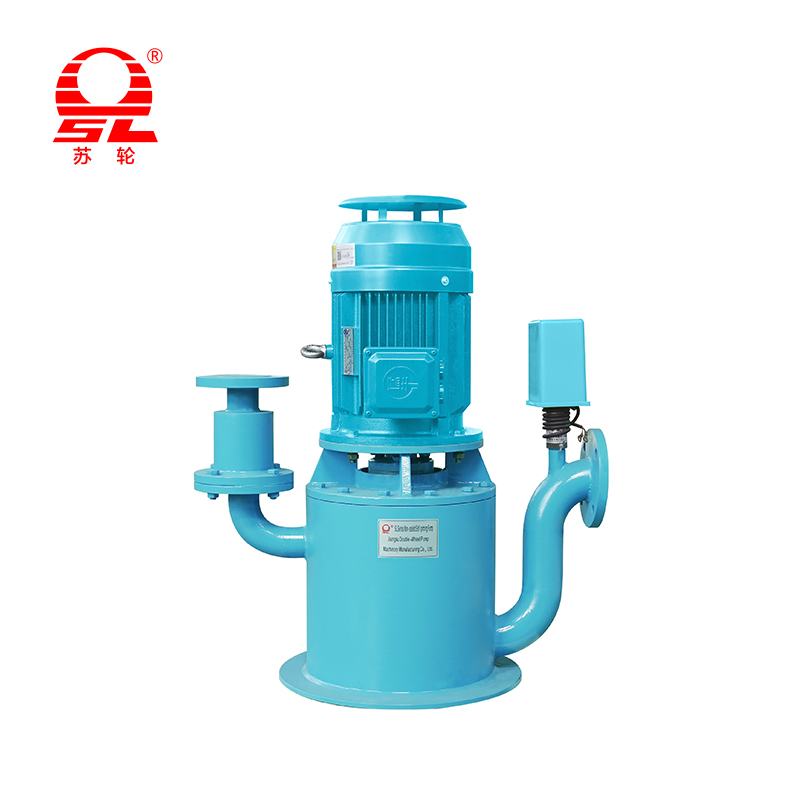
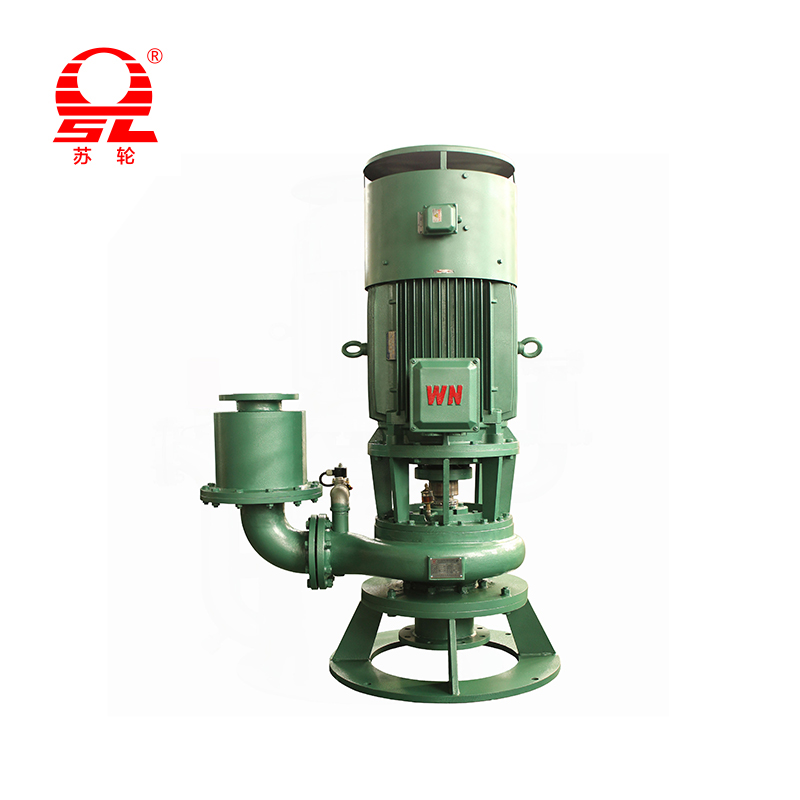
 WFB Series Seal-Free Self-Priming PumpSealless structure, suitable for media-containing conditions, self-priming height up to 7 m, short priming time, wear-resistant, pressure-resistant, and high-temperature-resistant; a reliable choice for sewage treatment and mine drainage.View Product →
The GJB series is equipped with an automatic vent structure. After priming, there is no need to manually loosen the vent plug. The operator only needs to fill water to the level line and then start the pump directly. The automatic vent valve inside the pump closes automatically when pressure rises. This design reduces operation difficulty and is suitable for frequent start-stop applications. During priming, do not exceed the upper level limit; otherwise, excess liquid may spray from the vent at initial startup.
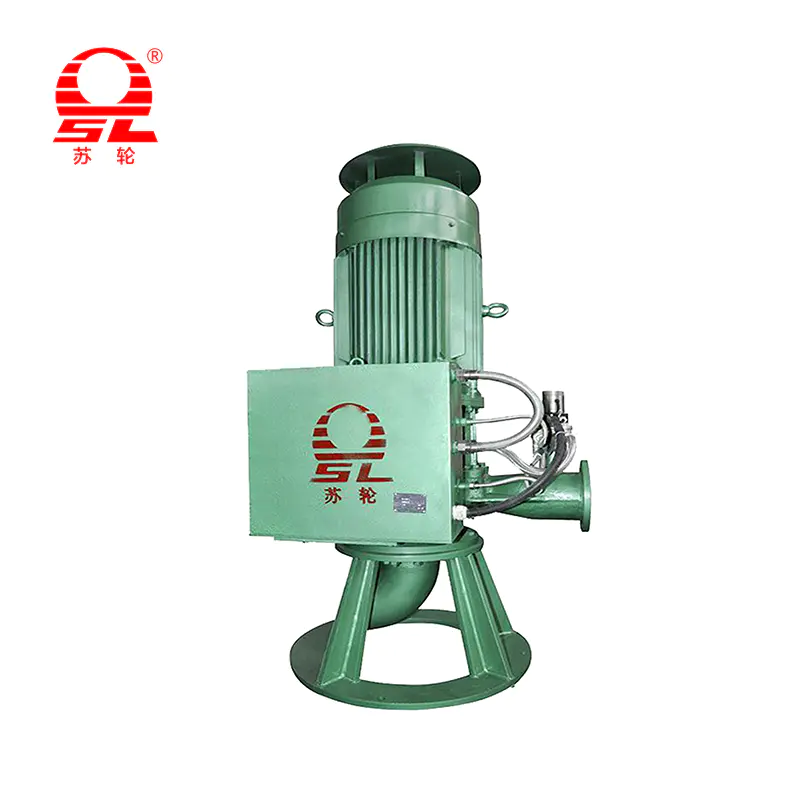 GJB Series High-Efficiency Energy-Saving Automatic Self-Priming PumpEquipped with an automatic vent structure; no need to manually loosen the valve after priming; easy operation; suitable for frequent start-stop applications; diverse materials and configurations to meet different pump room space and working condition requirements.View Product →
The GZB series adds a special pre-swirl structure at the impeller inlet, resulting in higher gas-liquid mixing efficiency after priming. Compared with the WFB series, the priming time at the same suction lift can be shortened by about 20%–30%. The priming process is the same as conventional pumps, but it should be especially noted that this series is more sensitive to suction line sealing. Any tiny air leak will significantly prolong the priming time. Therefore, before priming, use a blind plate to seal the suction inlet and briefly start the pump to test the pump's own self-priming performance, eliminating interference from pipeline factors.
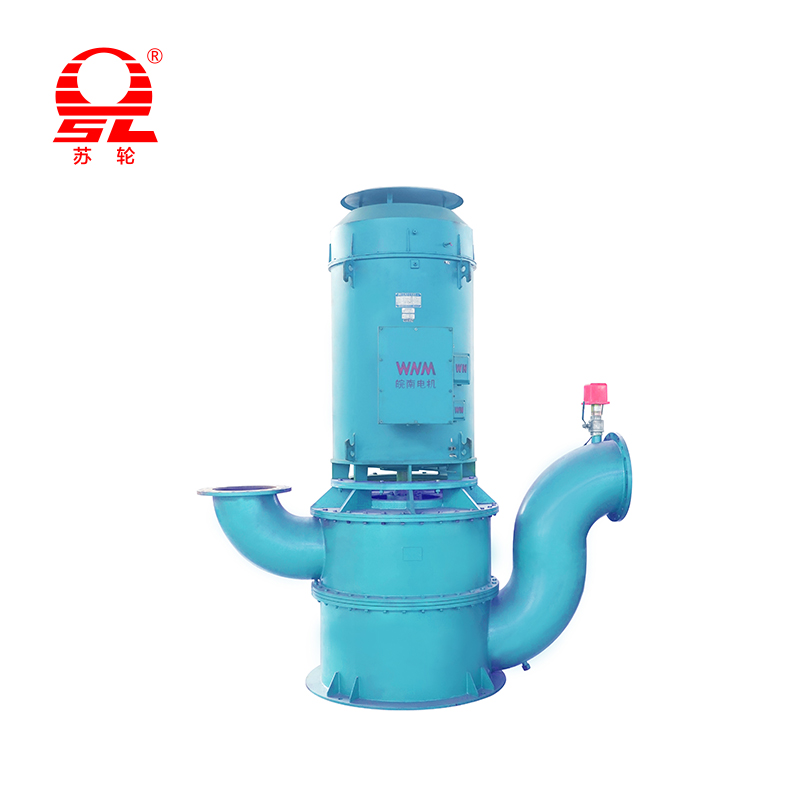
 GZB Series High-Efficiency Energy-Saving Self-Priming PumpOptimized self-priming performance, high gas-liquid mixing efficiency, priming time 20%–30% shorter than the WFB series, labyrinth centrifugal airflow seal with no friction and wear, suitable for rapid startup and harsh working conditions.View Product →
During the selection stage, if the on-site suction lift often changes or operators rotate frequently, the automatic vent function of the GJB series can reduce the risk of misoperation. If the pumped liquid contains fibers or particles, the sealless structure of the WFB series has advantages in maintenance cost. For working conditions that require rapid startup, the high-efficiency gas-liquid mixing capability of the GZB series deserves priority consideration.
Priming may appear simple, but there are safety risks in chemical, sewage treatment, and mining environments. Operators must follow the principles below:
The priming frequency of a self-priming pump is an important indicator of system health. For a normally operating pump, after the initial priming, as long as the pipeline is well sealed and the foot valve does not leak, subsequent startups do not require re-priming. If every startup requires priming, or if the priming time lengthens month by month, hidden defects exist.
It is recommended to include the following maintenance items in the monthly inspection plan:
| Item | Method | Standard |
|---|---|---|
| Pump chamber residual liquid check | Open the level plug and observe after shutdown | Liquid level not lower than the impeller centerline |
| Recirculation port check | Remove the pump cover and clean | Through hole free of scale and debris |
| Suction line sealing | Negative pressure holding test | Vacuum drop not more than 10% in 5 minutes |
| Foot valve sealing | Let stand for 30 minutes after priming | Liquid level drop not more than 10 mm |
| Impeller clearance | Measure with a feeler gauge | Not more than 1.5 times the factory value |
If the pump is to be idle for a long time, drain the pump chamber and suction line, and flush the flow channel in contact with the medium with clean water. When re-commissioning, refill with clean water according to Section 4 of this article, and check the status of the mechanical seal or auxiliary impeller seal. For GJB pumps equipped with an automatic vent device, after a long idle period, manually press the vent valve core to confirm that it is not stuck by foreign matter.
No. A self-priming pump needs pre-stored liquid in the pump chamber to establish vacuum. Even if some models can run dry for a short time, it does not mean they can run without water for a long period. Dry running will cause temperature rise, seal wear, and impeller damage.
Yes. High-temperature liquid vaporizes more easily, and steam may be generated in the pump chamber, resulting in poorer gas-liquid mixing. For working conditions involving media above 80°C, it is recommended to prime with liquid close to the medium temperature and confirm that the NPSH margin is sufficient.
During normal operation, as long as the liquid in the pump chamber is not lost, re-priming is not required for each startup. If priming is required every time, it indicates leakage in the foot valve, check valve, or piping, and troubleshooting should be carried out as soon as possible.
A small overflow usually has no effect, but excessive filling may cause liquid to spray from the vent at the moment of startup. Fill strictly according to the level line.
Yes. The longer the suction pipe, the larger the volume of air that needs to be expelled, and the longer the priming time. It is generally recommended that the suction pipe length not exceed 15 m, and the horizontal section should slope toward the pump. For longer-distance conveyance, consider installing the pump closer to the liquid source or using a long-shaft pump.
If you want to learn about selection points for self-priming pumps in different industries, such as mine drainage, chemical conveying, or emergency drainage, you can view Which Industries Benefit Most from Self-Priming Pumps. In addition, if you have specific working conditions that need evaluation, you are welcome to contact the Double Wheel Pump engineering team. We will provide priming solutions and pump model recommendations based on suction lift, flow rate, and medium characteristics.

+86-0523- 84351 090 /+86-180 0142 8659


Add 1: Parque Industrial de Hongguang, Jingjiang City, Província de Jiangsu, China
Add 2: No.68, Xinyi Road, Industrial Park, Jingjiang City, Província de Jiangsu, China
+86-0523- 84351 090
+86-180 0142 8659
+0523-8435 5588